Unknown's avatar

A one-year anniversary – let there be light

A new navigational beacon was installed at Grief Point Nov. 29, 2023 by the Marine Civil Infrastructure unit of the Canadian Coast Guard, 87 years after the first one was installed in 1936. There is, they tell me, no record of what precipitated its establishment, of what particular grief signaled the need for a light.

There is much speculation about why this rather innocuous point is so named. It’s a low shelf reaching out into Malaspina Strait, whose only danger to navigation is that an unwary boat might be pushed onto the shifting gravel that makes up its beach. Anyone shipwrecked could just walk a few feet up onto solid ground.

The BC Geographical Place Names database says the name was officially adopted in 1945 “based on British Admiralty Chart 580, 1862 et seq. Origin/significance not known.” The database also refers to historian Athelstan Harvey, who speculated that its name came because “it is an exposed spot in a westerly wind, causing grief to many a mariner.”

That may well be the case. Further correspondence with BC Geographical Place Names says, “The version of British Admiralty Chart 580 we have in our office is from 1860, with corrections in 1864, and has Grief Point labelled, so I think it’s safe to say the name existed by 1864.”


The men behind the early coastal mapping expeditions are named on the charts themselves and their work led to the establishment of the first beacons on the coast in the 1860s. Captain G. H. Richards, conducted the Vancouver Island Survey between1860 – 1862. Another name on the 1860’s chart was Pender.

In Boats, Bucksaws and Blisters by Bill Thompson (1990), Golden Stanley (GS) interviewed Roy Padgett (RP) in 1982 about Grief Point’s name:

“RP: When they were logging from Fiddlers, that road came straight down and the log dump was right where Gus Courte used to live … Well, apparently, when they dumped the logs in there, every so often they’d get caught with a westerly, and they’d get around the point [the logs would]and they got in the habit of saying there’s nothing but grief here,” and that’s the story I heard.

“GS: Well, it goes back further than that because … I think it was Pender who came up on the Trumpet to survey the coast at that time … and his log is lost, but the name goes back into the eighties [1880s] and from there on it’s called Grief Point. Before that, there’s no name on it. It was during his survey that the name became Grief Point. His log, apparently, went over to England and became lost. There’s no record of it …”

qathet Museum and Archives’ website also has notes on the naming.

“There is some speculation as to where the name Grief Point comes from. One possibility was that it refers to an epidemic within the indigenous population, another is of a wreck in which three men perished, while another is that it refers to the tugs and boats that would shelter behind the point during storms, to get away from the ‘grief’.”

Mom’s late friend, Fran Gregory, who used to live just above the point, painted five or six tugs lined up there with their boom stretched out behind them.


The museum site goes on to say, “At one point the area was also referred to as ‘Pneumonia Flats’ and referred to the flat area by the lighthouse in Grief Point. This area was a farm from the 1880’s and was sold in the middle 1960’s for a sub-division.”

Oddly enough, the references to the Tla’amin peoples’ use of the area talk about the protection it provided. Sliammon Life, Sliammon Land by Dorothy Kennedy & Randy Bouchard, states:

“The Sliammon name for Grief Point is Xákwuem, “having cow parsnip” referring to the abundance of “Indian rhubarb” (cow parsnip) that used to grow here. This was an important camping site because it afforded good protection from the southeast wind. In more recent years, before the area was developed, the Indian people planted gardens here.”

I’ve never understood the reference to protection. When my grandfather, who had lived many years in Shetland before bringing his family first to Hernando Island and then to Powell River, a man who undoubtedly knew something about wind, found out my mom and dad were planning to build a house in the new subdivision down at Grief Point, he exclaimed. “Surely you’re not going to build in yon windy hole!”

And windy it is. In rough weather we’ve seen tugs trying to round the point, sometimes looking as if they’re not moving at all. Other times, they actually start to slip back and end up executing a rather perilous looking turn to head into the shelter below Penticton Avenue.

The new lighthouse is the third one we’ve seen since my family moved down to the new subdivision in 1968. I think, from the photos, there was at least one between the first in 1936, and the one removed to make way for the 1968 version. TJ Courte, whose family lived at the point for many years, said her mom always said the beacon belonged to the queen, and they weren’t to climb on it!

I’ve tracked down a couple of old photos and of course, there was one when we built down here. My dad wrote several letters trying to get the lighthouse plot tidied up so it fit more neatly into the new subdivision, which they finally did. And they took up his offer to mow the lawn around the beacon in exchange for the use of the electrical outlet in the body of the tower, an outlet connected to the BC Hydro grid.


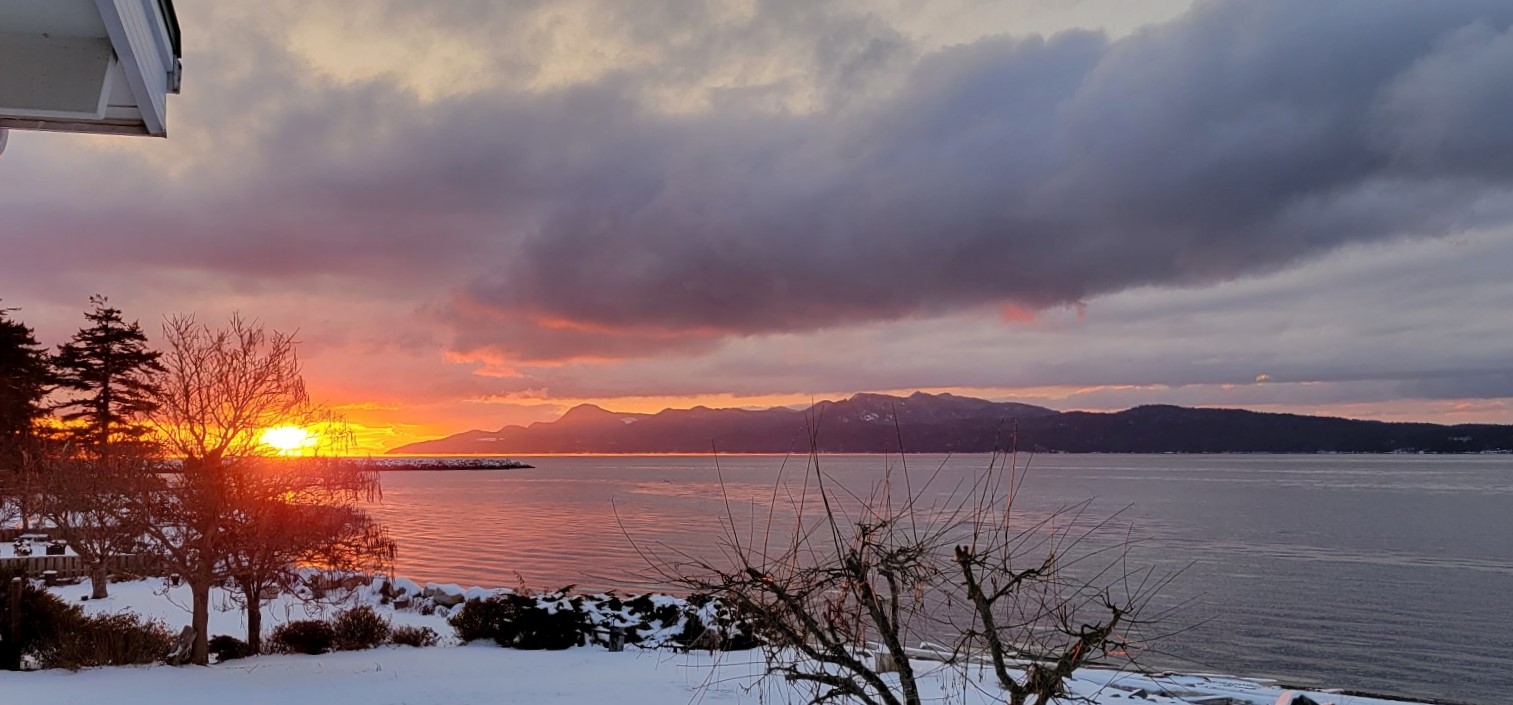
The new tower is nowhere near as dramatic a landmark as the old red and white rocket ship blinking its white light out into the strait (as well as into many of the houses in the neighbourhood). The new light flashes red and is much less intrusive. Its blocky silhouette with the solar panels and battery look a bit like a cheerful robot holding its hands out in greeting to the passing boats. We’ve decided to name it Brent after a dearly loved red-headed friend who died suddenly just a month before it was installed. A sturdy, stalwart beacon of light. Shine on, Brent.


Unknown's avatar

Layers of life

The house next door is on the move.* Yes, really. Men set blocks and jacks, scramble inside, under, high on the roof, kicking aside the old moss where killdeer nested one summer. Like worker ants tending to the queen. They cut it into sections, raise it up on big blue beams laid at right angles, and swivel it around after rubbing Ivory soap between opposing beams. They tuck wheels underneath and pull it off the basement – the house organs exposed: furnace, water heater and copper pipes.

Lights festoon the massive bulk. Come midnight, it will glitter like Christmas. The 1980 Kenworth T800 with its blue stripes will rumble into life and pull it off the lot along the subdivision road to climb a hill so steep it’s marked with Do not enter signs. Small for a house, the driver says. 40 feet x 25. Only 30 tons. It will be accompanied like a royal procession.

About 375 horsepower and an auxiliary transmission. The Kenworth.

Our Vauxhall Victor was a lighter blue. Robin’s egg. Forty horsepower and three on the tree. It was eight years old when we moved into our new house down here at Grief Point in 1968. Learning to drive, we had to make it climb those same hills. Front tires hanging onto the rim of the cross road at the stop signs. Brake, clutch, brake, clutch. Heel and toe. Stall. Start again.

The Kenworth will have traffic stopped when it makes its midnight crossings, an advance crew to remove any unexpected obstacles.

The house next door used to be the same blue as the beams it now rests on. It wasn’t here when we moved down to the new subdivision. Just the tall grass growing on what had last been a market garden and a few houses scattered along the new road.  Built by Frank and Bessie Bemrose in 1971, the blue house was a bright bungalow filled with glitter and glamour. Bessie’s grey-blue hair was bobbed short; her big beaded necklaces clicked and clanked in bright colours, sharp facets on her rings. Bracelets to her elbows. She’d been my Grade 3 teacher. Frank was a tonsured twinkler who sang O Holy Night every Christmas at our church, a revelation for this cynical non-believer. And what a gardener. Within a few years he’d grown a productive cherry tree, long gone now, and a wonderful apple tree. We made applesauce with its apples just last year, the final harvest. The tree was felled so Frank’s house, the old blue paint showing through the newer green layer flaking off, could be moved.

My brother Herb showing off his catch in front of Bemrose’s house in the early 70s. That pine tree is now enormous, but the fruit trees are gone. Lee and Mike Hill bought the house around 1985. They sold it to Fred and Terri Formosa in 2000 who subsequently rented it out until they were ready to build a new house there; hence, the move.

Harry Nickel was the first settler to occupy the point. His obituary was published in the Powell River News after his 1933 suicide.

He cultivated a number of acres of land at Grief Point, and also raised a number of sheep. His home is a famous spot on the coast. He was one of the first, if not the first white settler in this district, coming here over forty years ago. He took up a homestead at Grief Point, which has quite a history, of which little is known. It is said to be the site of a former Indian village, and that traces of Indian huts have been found.

Mr. Nickel took up a homestead of 160 acres on the point, and later sold several parcels, retaining the point for his residence. He has lived practically alone as a bachelor, as far as can be learned. We understand he has left the estate to Mrs. Courte, who is another pioneer of this district, and the first white woman to reside here [supposedly she taught him English].

When Mr. Nickel first arrived, transportation was negligible, and he made occasional journeys to Vancouver for supplies in a canoe, which occupied several days. He left a number of trees on the place when he cleared part of the land. These, and some fruit trees he planted, are splendid specimens. Grief Point forms a shelter [on its north side] for tugs with booms of logs in stormy weather. On the beach there are clam shell deposits about 10 feet deep and several hundred yards long. Scow loads of these have been taken away several times.

Victor (VI) Courte bought the property from his parents in the mid-forties and lived there with his family for many years. In the early sixties he offered to sell it to the town for a park, but the taxpayers refused the asking price of $58,000. So a consortium of locals pooled their funds and created the subdivision, each member putting their names into a lottery to see what waterfront lot they’d receive. They also got a dividend as other lots were sold. Aside from my family, June Vogl is the only other original investor still living here.

The archaeologists are digging test pits around the excavation. They will find artifacts. Everyone who grew up in the older houses up the hill collected them over the years before and during the subdivision’s construction. Colonial artifacts too – old cars were, they say, buried in the gravel, which likely explains the dips in our oceanside lawn. Beach gravel was trucked out to facilitate various city building projects.

Layers upon layers. Local geologist Tom Kolezar says the point is a fluvial fan likely left over from a melting glacier 10,000 years ago. All of our homes rest on this unstable blend of sand and gravel, a deposit that slipped just offshore in the 1946 earthquake and severed the telephone cable to Van Anda. Apparently before Nickel planted his trees and gardens, cow parsnip, from which it received its Tla’amin or ʔayʔaǰuθəm name, xah kwoom, grew here in abundance.  One source says it was an important camping site where the Tla’amin people also planted gardens.

The layers in the soil pits produced flaked stones and cultural soil, evidence of hundreds if not thousands of years of habitation. Like the abundance of clam shells referenced in Nickel’s obituary, they can only hint at the layers of meaning and memory that predate the houses in this subdivision. That predate the market gardens.

Grief Point is a vantage point where everything meets – the winds, the tides, the subterranean slips. The debris of our lives here will one day join the archeological evidence illustrating a tenure that, I suspect, will be much shorter than that of the Tla’amin. More like that of Bemrose’s house. Fleeting.

Kudos to Steve Skorey of Bolder Contracting who arranged to have the house moved and the Belton crew for managing a difficult project – we wish the house well in its new home high above Cranberry where Steve is planning to turn it into a wilderness lodge.

*The house was moved in late May and early June.

Unknown's avatar

Disposition of the Dead*

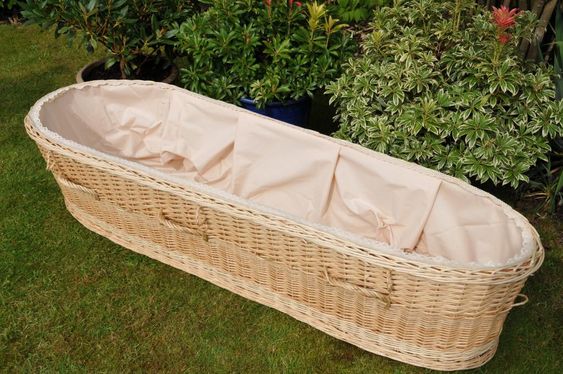
I first came to this topic because Lynn and I were trying to decide what to do. We’d always thought we’d be cremated, but green burials seemed like a good idea and if I’m honest, it was the lovely basket coffin with its cotton bedding we saw on a hospice tour of Stubberfields Funeral Home that really attracted me. So tasteful. So comfortable.

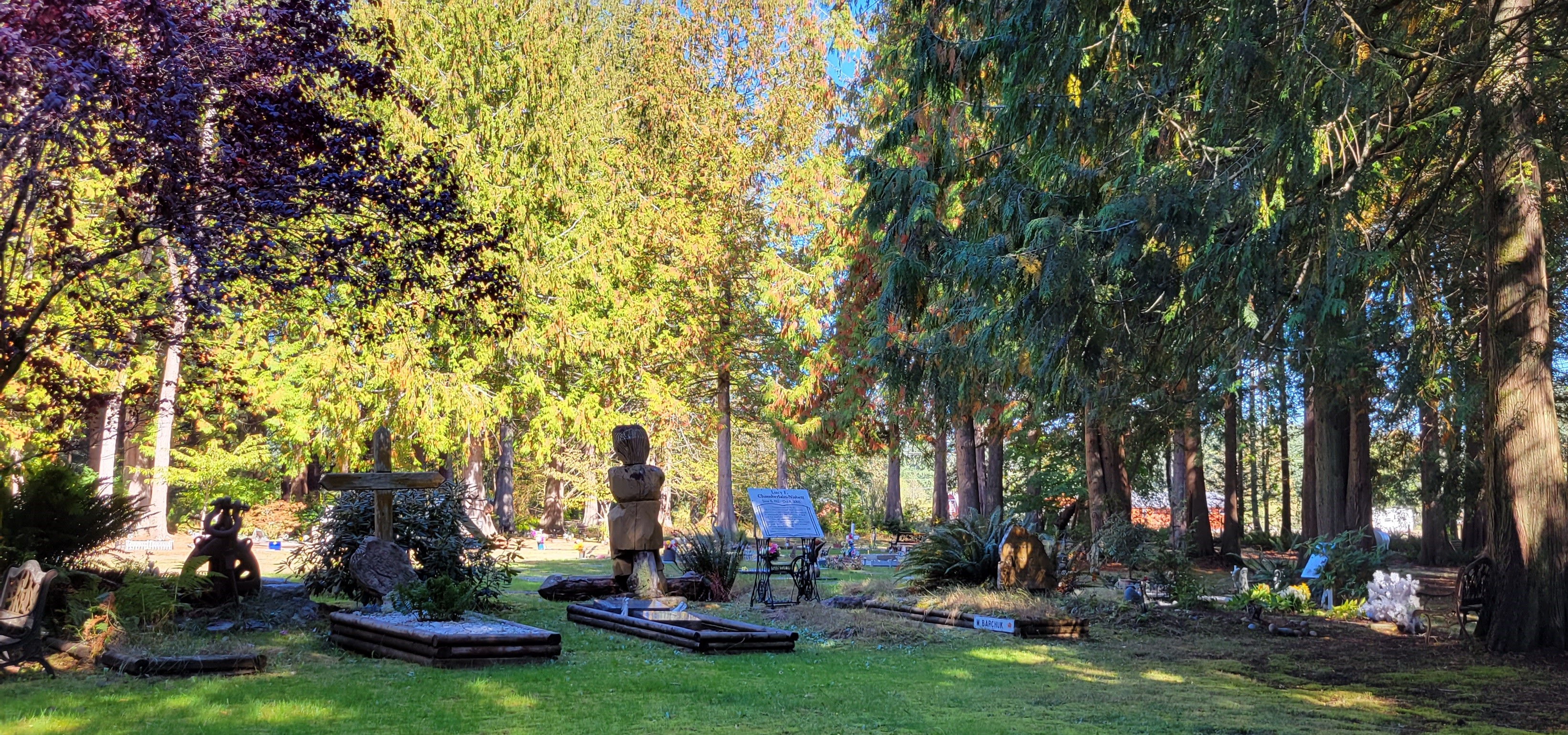
And the Cranberry cemetery is beautiful. A little sedate – not much room for flair – but peaceful and sunny. If we were cremated, we could also go to the Kelly Creek cemetery. It is lovely and crazy. But do our kids want to do something zany to remember us by? It’s not really their style. We’ll have to take them there and see what they think.

The Holy Cross Cemetery on Nassichuk Road in Kelly Creek

While researching this, my mother, who was 99 and in good health, suddenly declined and we were, while mourning her death, busy putting into action her wishes about cremation, burial, and funeral. It brought back lots of memories, or their lack.

When my dad died in 1970, it was very sudden – post-polio syndrome. He was right upstairs when my mom came down to tell us, but I didn’t go to see him. I don’t know why. My brother remembers going. I was in a very strange place. Friends came by and what I mostly remember is I wasn’t wearing my usual mascara and eyeliner. Of course, no one noticed, but I stopped wearing it after that. It seemed pointless. Went back to school within a day or two.

Dad wasn’t cremated until his parents were able to get here from Saskatchewan. They wanted to see him. I think they asked me if I wanted to go with them to the funeral home, but I didn’t. Was he in the church for the funeral? I don’t remember. As I said, I was in a strange sixteen-year-old frame of mind.

I must have had some notion that cremation meant the body disappeared – that there was nothing left. There was no talk of ashes, of burying them or of spreading them. I didn’t think much about it until years later. I asked Mom. She’d left them at the funeral home. He was gone, she said. The ashes held no significance for her. After that Stubberfields tour, I asked the director Patrick Gisle what he did with ashes left behind. I actually wondered if they could still be there, fifty years later. He told me it happens regularly and he has a few quiet places he spreads them.

I suspect Dad’s parents would have liked to bury them in the lovely little prairie cemetery where they’re now buried. There’s something beautiful about the expanse of land and that big prairie sky. Dad might have liked it too. He was at heart, I think, a prairie man. My friend Margaret’s family has a private graveyard in Manitoba, near what’s left of the family farm. On her regular trips to the small town where her brother David lived until his death a couple of years ago, she tends to the graves, which go back at least four generations.  She has a deep sense of attachment to the place and its history. She’s thinking she’ll have her ashes buried there.

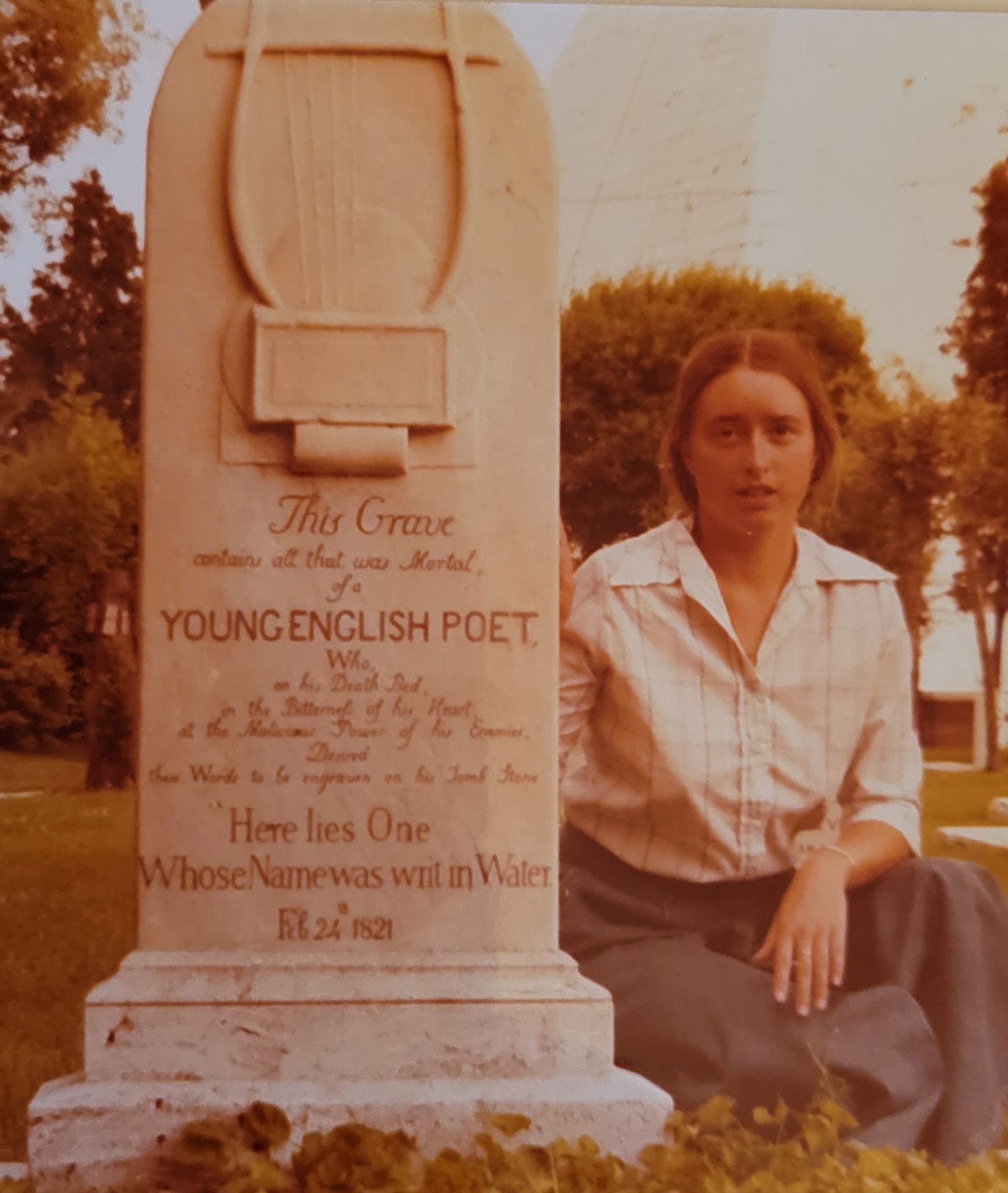
Cemeteries give a kind of permanence to the disposition. They form part of the historical record and can become places of both private and more public pilgrimages.  I remember visiting, in 1977, the grave of the poet John Keats in the Protestant cemetery in Rome just after going to the rooms beside the Spanish Steps where he died of TB in 1821. He was 25, a year older than I was then. I’d been reading his letters. His friend, painter Joseph Severn, described his death: In the afternoon he uttered his last words ‘Severn-I–lift me up–I am dying–I shall die easy–don’t be frightened–be firm, and thank God it has come!’ That night he expired, ‘so quiet’ that Severn still thought he slept. I found myself in tears – so moved by his youth and his generous heart. His epitaph broke my heart: Here lies one whose name is writ in water.

Although tombs can become the focal points of terrible conflict, visiting the graves of celebrated figures connects us to our cultural and religious communities, whether it’s Jim Morrison in Paris or the Taj Mahal in Agra. On a local level, participating in the cremation, the interment of the body or the spreading of ashes connects us on a more intimate level to our family and friends.

The past fifty years, at least in North America and Europe, have seen the creation of rituals to replace the Christian traditions many of us have left behind. Children decorate their grandparents’ coffins, ashes are turned into jewelry or sculpture, spread from helicopters (or in the case of Hunter S. Thompson, shot out of a cannon). Notes are tucked into urns, shrouds are woven by the intended user and proudly displayed, coffins are built in distinctive shapes; a popular example can be used as a bookcase until it’s needed for burial.

To reduce both financial and environmental expenses, Community Supported Dying qathet lends out a handmade and decorated coffin to transport an enshrouded body to its burial site at the Cranberry Cemetery.

Borrowing a Tibetan tradition, we started hanging prayer flags after a trip to Nepal, liking the idea of the wind carrying prayers out into the world, helping us all in the work of practicing compassion, of relieving suffering. The spot we chose on our property near Smithers funneled the wind blowing through from one mountain range down the canyon of the creek we lived beside into the watershed of the Wedzin Kwa and on to the great Skeena passage. I sewed together my mother-in-law’s beautiful hankies in her memory; we made flags out of old linen napkins with poems and blessings written on them. We spread ashes among the willows and aspens facing into the sunniest opening in the canyon walls. We created our own sacred place.

But then we moved. It’s on someone else’s property now.

We hung prayer flags from the lighthouse beside our house at Grief Point, or χakʷum by its ʔayʔaǰuθəm name, but it doesn’t have the same sense of private pilgrimage. The land was alienated in the 1890s and our subdivision was built in the 1960s. Tla’amin artifacts were found during the extensive excavation work, underscoring the ways in which precious places can be overrun, lost.

Cemeteries are perhaps an attempt to keep that sense at bay. My grandma, aunt and soon my mom’s ashes will be buried in Cranberry. My sister has reserved a plot there too. I suspect in one form or another Lynn and I will end up there. Still not sure what form that might take.

Mom and I visited the Cranberry Cemetery just a month before she died.
  • This piece came out of research done for an article by the same name published in qathet Living for its Memento Mori issue in November 2023 and a gathering I led for one of the qathet Art Centre‘s Memento Mori events November 15, 2023.
Unknown's avatar

Driftwood turned loose

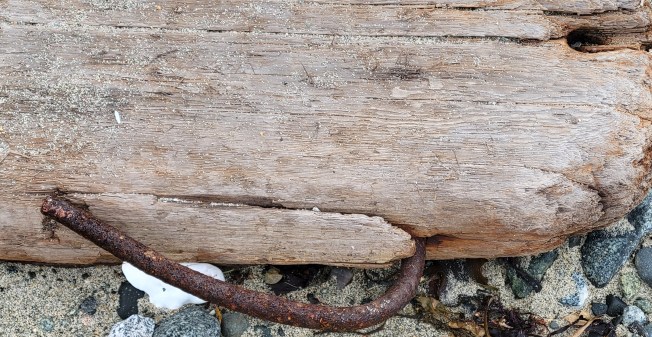
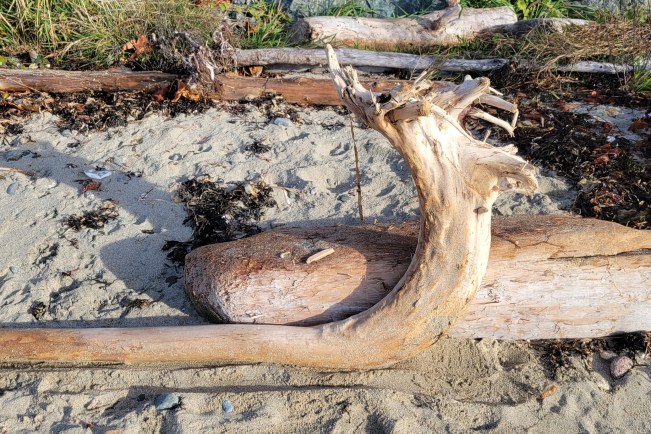
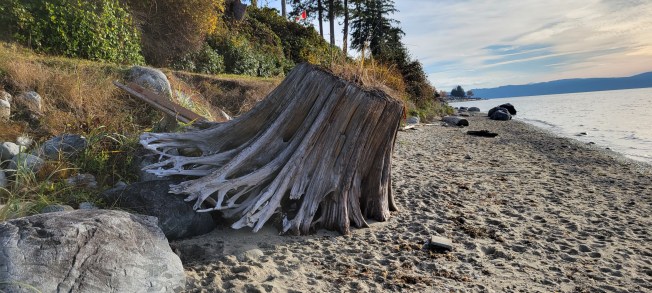
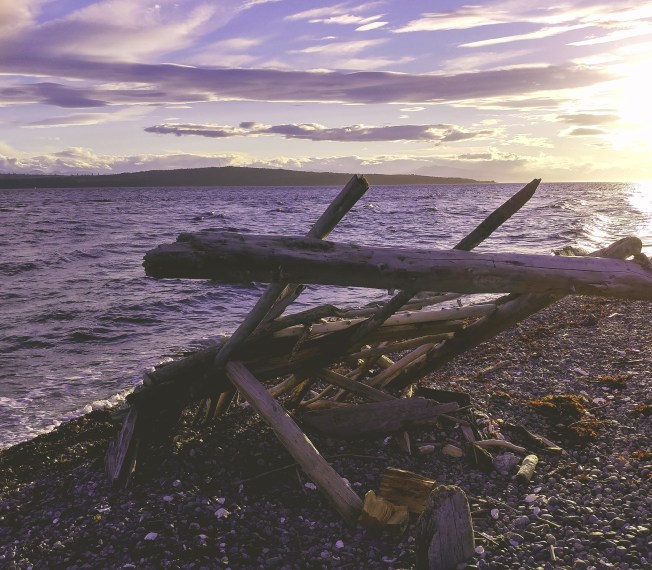
We’ve had a couple of good blows in the last few weeks along with high tides – 17.7 feet here at Grief Point, which is as high as we’ve seen it. Luckily they didn’t coincide. The wind and the tides. Still, everything has shifted. Hundreds if not thousands of logs moved northwest up Malaspina Strait over the past month. Sometimes whole trees, root clusters and branches taking the shape of mysterious vessels. Sometimes a seagull riding.

Walking our usual stretch of beach is like opening the pages of a new book – pages shining with unexpected images, mysterious conjunctions, peculiar stories. Twisted plots expose deep roots, once hidden. Massive logs block stone stairways. Oyster catchers mine the seaweed, tumbled into heaps along the tide line. The peculiar kale plants that grow in the gravel are freshly salted. Still growing.

Driftwood. Having lived for over forty years on a road named Driftwood beside a creek with the same name has focused my attention on the stories those jumbled piles contain: the seed that germinated, the soil that received it, the sunlight it processed into stems and leaves and bark, the years it witnessed, the creatures that climbed it, rested and nested in its branches, the music the wind played in its foliage. There, in Driftwood Canyon, it all originated within the few miles between the creek’s alpine beginnings and our home.

Here, beside the ocean, the whole coast sends driftwood our way. Some trees ripped out by wind, erosion or machinery. Straight cuts on the huge ones tell another tale. Men and chainsaws. Trucks on precipitous roads. The big boom logs, holes at either end to tether the others. The ones that escaped. Then there’s the lumber – wood that could have travelled the world before it arrived here. A boat torn apart in a storm, construction garbage tipped down a bank, a summer cabin bulldozed onto the beach. Decorative fences, seashore patios for viewing the sunset, washed away. The bottom step of a stairway suddenly a chasm.

Children build forts with it all.

For each scrap of wood, there was, somewhere, sometime, a tree. That one in the forest everyone questions. Whether or not we heard it fall, that scrap of cedar or Douglas fir contains hundreds of years of stories. The composting berries birds deposited in its canopy. Globe-travelling rain dripping nutrients through the lichens dangling from high branches. Traces from the salmon carcass a grizzly brought inland to share with its cubs. Calcium from the shells seagulls dropped. Everything on the forest floor adds its own note to the song the tree sings. A pile of grouse feathers flung from the owl’s roost. A mouse skeleton under an alder leaf. Someone’s old leather glove decomposing under the moss. A forgotten sandwich. A dog, lost.

Its stories are like the ones languishing in folders in my desk. Some abandoned under a tangle of blackberry vines. Others unfinished. Just resting for a few days, weeks or months until the wind and water, stirring my imagination, set them free again.

After the big wind and tides, the sand is packed hard for pleasant walking and the beach is a library made new. Old favorites, brought out and dusted, seen in a new light. New arrivals, waiting for our imaginations to open them up and make their stories part of our own.

Unknown's avatar

Pausing for the solstice

Grief Point

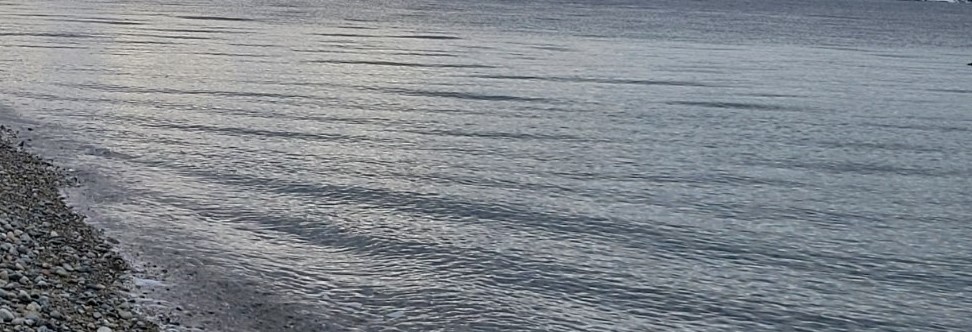
Suddenly, sunrise. Light streaking across the water, a moment of colour and then the silver of mercury. All these shrinking days, the light angling lower and lower, the water turning and turning under the sky as if alive with creatures stretching their bodies toward the light. A living layer of sinuous and sensuous curves catching the brief brightnesses under winter clouds.

Trying to make sense of it, to see the patterns, takes a lifetime. They mark the trajectory of the planet itself, rolling under the great rising and falling wave of the tides. The tug of the sun and moon. The currents. The wind. Often right here, creating a hullabaloo in the downpipes, on the water.

Occasionally distant winds set waves down the fetch to come ashore, noisy where the flags hang limp. The turn of the point itself, an obstacle with submerged diversions, creates eddies and refractions.

Sometimes a layer of water moves across the ripples, a smooth, flattened line tracing some invisible trajectory, some invisible desire, some secret momentum. A stream crossing the currents that pull the strait in its customary path.

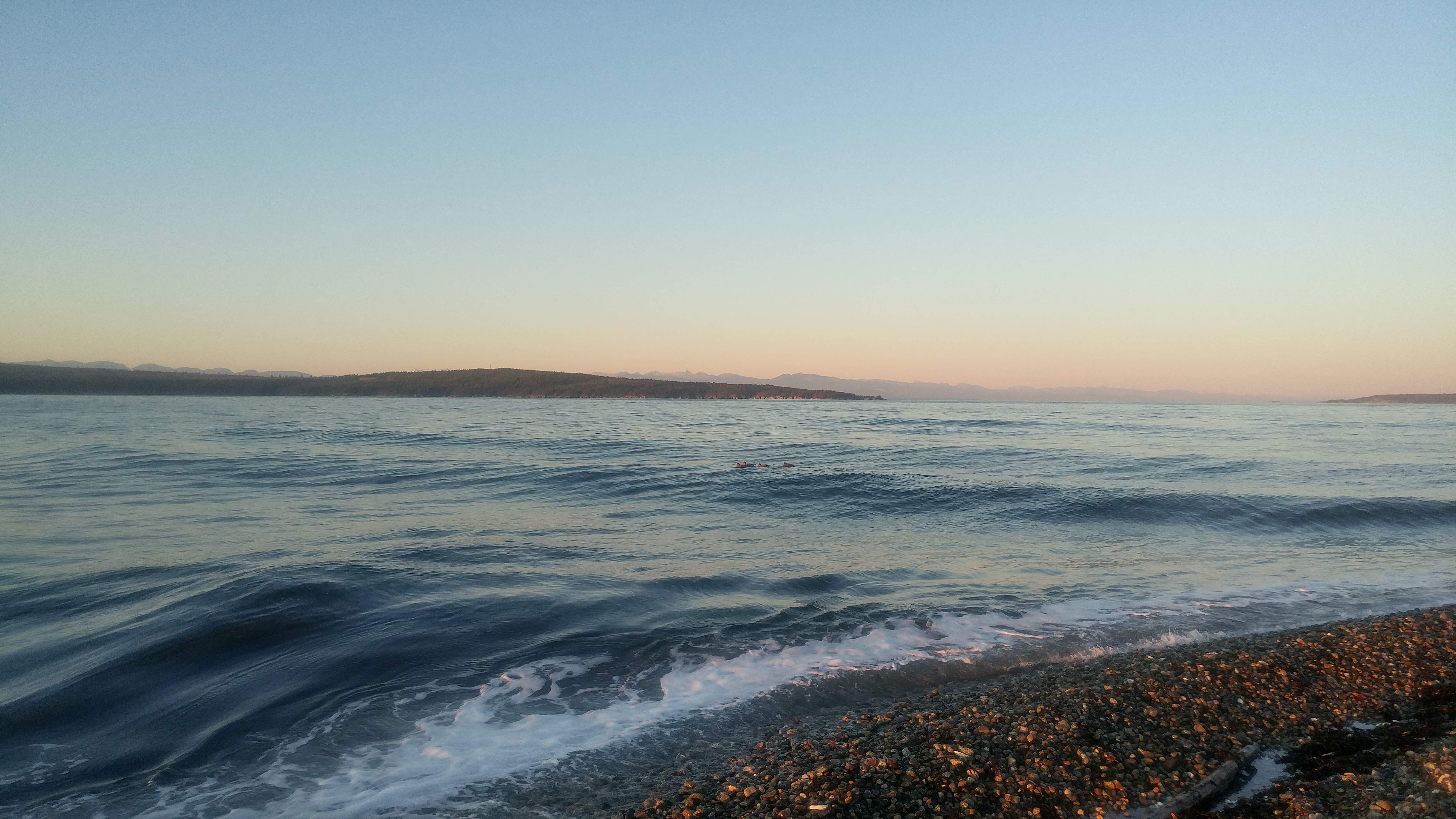
And then there’s a moment when it all stops. The water and the shore sit side by side in the great theatre we inhabit, one as calm as the other, unruffled. And you look through to pebbles as clear under the water as they are under your feet. A sea lion rises, rolls over and slips back under. A harlequin tucks it head and dives, a neat little plop. Ripples. All light, marvelous light and the shadows it creates. Movement and silence.

Unknown's avatar

For my mom, of course

Over twenty-five years ago, when we still lived in Smithers, I wrote this reflection on water. Just last week my husband and I rode our bikes up to Haslam Lake following the old road I used to bike when I was a kid. There we ran into David Holden, cleaning up the picnic site. My mom taught him in Grade One and he told us all about the sixty intervening years. Now that we’ve come to live with her, once more beside the ocean, it seems right to offer this up for Mother’s Day.
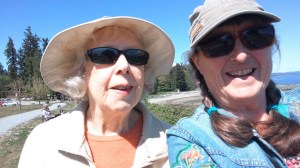
 

At Willingdon Beach last week.


I sat at my kitchen table laboriously folding an origami rowboat. I had bought a book demonstrating the nautical equivalent of the art of folding paper airplanes. Ostensibly for my children, the book was really for me. I love following the instructions, figuring out the folds and angles, producing a perfectly engineered ship from a leftover scrap of paper.

I needed an excuse, however. A Mother’s Day present lay waiting to be wrapped, and I decided to decorate it with paper boats. So, naturally, I started thinking about water, my mother, and – inevitably – swimming.

I was a child and the sea was home to my body. Its salt supported me as I thrashed my way to buoyancy; it cleansed my scrapes and cuts; it washed illness away. My mom never took us to the beach and said, “Now, don’t get wet.” Yes, I have seen this, have heard parents tell their children they can’t go swimming because they have a cold. Or it wasn’t warm enough.

Why were they there, I wondered, if not to swim? To torment their children? I was an adult before I understood that people go to the beach for reasons other than swimming.

My family firmly believed that swimming in the ocean, even in cool water, was a tonic; refreshing and curative. It would certainly never cause any harm.

Perhaps I should clarify here that it was my mom’s family, weaned on North Sea beaches, that made the summer evening trips down the terraced streets of Powell River to the beach. Since we lived farthest away, my mom would begin the walk with just the three of us kids in tow. On the way down towards the water we would pick up Granny, and sometimes Grandpa, and then join our aunt and her three children at the beach just below her house. But the sons-in-law, men who worked outside on log booms summer and winter, day shift and night shift, were intent on keeping their bodies out of the salt chuck; it would take more than a warm, idle summer evening to re-route those neural paths.

Unnecessary modesty was scorned on these outings. We changed behind boulders or the massive roots of beached cedars, struggling to pull clothes over damp salty skin before a shielding towel fell or was blown away. My grandfather would change beneath a towel even at the most public beach on a Saturday afternoon. One summer, while his wife was back in Scotland, my mom had to force him to buy a new bathing suit; his old one was so full of holes it was no longer decent. In his late seventies at that time, thin, wrinkled, and almost blind, he appeared the next day in brilliant blue satin trunks, their cut clearly intended for young hunks. It was, I think, his last bathing suit.

As I grew and was exposed to a wider array of summer social activities, I was astonished to discover that many people didn’t like to swim at all, and of those who did, most preferred lakes. As wealth grew, swimming pools.

As for myself, I have never trusted fresh water. Not even swimming pools. The sight of small children toddling along the slippery tiles, a stumble away from eight or ten unforgiving feet of bleached water, makes me cringe. What will happen if I leave before their sundazed parents wake up? Or if the lifeguard is distracted by a teenage commotion?

But watching children play beside the ocean is as comforting as seeing them curled up, dozing in the sun against salty women’s skin.

The beach at the bottom of Third Avenue where we used to swim was protected and benign. I could not fall in off the edge; at high tide there were no sudden drops, just enough slope so the water got comfortably deep before I was too far away from my mom for reassurance. The ocean could not carry me off because each wave pushed me back to shore. Its secrets were revealed at every tide’s ebb, its furtive crabs and limp slippery weeds, its smooth stones and gravel washed twice daily, as orderly as my own ablutions.
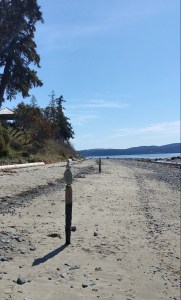
In this crazy Covid time, the beaches are a refuge, a place to express both our isolation and our connection.

There were no rip tides, no undercurrents, just waves, logs to ride and dive from, and buoyant salt cradling young bodies. It seemed to me the only people the ocean claimed were those foolish enough to go too far from shore, and then what could you expect? Storms, too much drink, holes in boats, these killed people. Not swimming.

Because we live so far from the ocean now, and my need for immersion is so strong, my children learned to swim in lakes. But growing comfortable with lakes has taken me years. There were oceans for swimming and puddles for puddling. On the clearest calmest day the ocean never reflected anything but fractured light. Lakes, being fresh water, were closer, in my family’s pantheon, to puddles. Not entirely clean and reflecting a different kind of light. A child peering in, wonders how deep is this puddle, are my rubber boots tall enough or will the water rise to slip over the rims? Then seeing the whole sky waiting in that calm reflection, the depth unimaginable, the child teeters terrified at the edge while feeling that pull down, down into the sky.

Haslam Lake, one of the lakes of my childhood, was like that. Still, limpid water reflected trees that crept right up and hung over its edges.

As for unclean, well, it’s not really fair to call Haslam Lake dirty – it supplied much of the town with wonderful drinking water. But when I was younger and still afraid of lakes, its squishy bottom, sludged stones, and logs dead beneath the accumulation of eons sent a ripple of distaste up my spine. Like cold, greasy cutlery at the bottom of a sink full of forgotten dishwater.

To avoid the ooze, we’d swim at a gravelly patch of shoreline resembling the seashore at high tide. And here the lake revealed its true nature; it was a cheap trick, a watery imitation lacking substance and buoyancy. Floating took effort; concentration wavered into floundering panic. All confidence in my fledgling dog paddle dissolved in flailing, sputtering indignity. Because of this, I disliked lakes. As well as muddy, tangled with weeds, hiding leeches of legendary awfulness, they were mean-spirited and dangerous.

Sometimes my mom took us to Haslam Lake fishing – not often, but once or twice. We’d rent a rowboat from a man with goats – the only person who lived on the lake. He must have lived there for years, before people worried about water supplies and had referendums on fluoridation. We rented the rowboat for forty cents an hour, $1 for two and a half hour’s fishing. Plenty of time.

I don’t remember anyone catching fish. Mom would tell one of us to be ready to take her line if the fisheries officers came by, but I never saw a fisheries officer deal with anything as insignificant as fresh water until I moved here to the Bulkley Valley, where salmon and those elusive steelhead battle their way beyond the tides, past the jealousy and treachery of fishermen and sloughing riverbanks.

The road to Haslam Lake was gravel and darkened by overhanging alder and salmonberry bushes. Above this impenetrable barrier the cedar and hemlock pressed in. Other roads led off to marshy Duck Lake and beyond to the preserves of more serious outdoorsmen. But the road to Haslam Lake curved left past the filtration dam, past the goat farm. It wasn’t a real farm, just a shack on a strip of land between the lake and the road, a strip of stumps and logs strewn across bright mossy grass cropped close by the goats. The goats would assume crazy perches on the stumps and run nimbly through the debris as we drove down to the dock of silvered boards.

When we were a little older, we’d ride our bikes up to Haslam Lake to fish or swim on our own. Later still, equipped with driver’s licenses, we’d drive up there in our robin’s egg blue 1960 Vauxhall station wagon with forty (“count them!” we’d laugh) horsepower. It was our first car. My mom and all of us kids learned to drive in it.

Braver now, we’d follow a narrow path to swim back beneath a rocky bluff. This was the place where Neil Mackenzie dove and broke his neck like in a gruesome summer safety film strip. Or was it his back? But he lived and walked and married and has children – I never did understand about broken necks and backs – I always thought it was instant death or paralysis, and yet there are people alive and seemingly well…

We measured our nerve, our maturity, against swimming holes. Powell Lake was a step up. It was a home fit for all the monsters of a child’s imagining. Swollen by a dam and spotted with deadheads, it was deep, prehistorically deep. Some claimed that there was salt water trapped at the bottom beneath layers and layers of unmoving lake water. And I remember hearing there were spots where they couldn’t find the bottom at all. I would imagine skillful, serious men out there in a rowboat, paying out mile after tedious mile of thin line, taut and heavy as it was pulled down into the sky reflected in the lakecalm surface.

Let’s face it. Lakes are creepy.

But they’re amateur freshwater villains compared to silent, sliding rivers. My children play beside and fish in the Bulkley River, one that has claimed many lives on its sweep to Prince Rupert. There are countless stories of fishermen slipping off its treacherous rocks; a mother’s nightmares lurk beneath the mercury sheen of its water.

There is a story of a woman parking on the river bank across the road from a pay phone. Leaving her sleeping two-year-old in the back seat to make a short call, she returned minutes later to find his footprints on the other side of the car, leading to the edge of the ice.

They never found him.

I remember reading another story of a man, helpless, watching his young son slip off a bridge into a river just east of here. He, too, was lost.

I know these sound like stories invented by nervous mothers to frighten children into obedience. But they were reported in the local paper; they are not parents’ imagined terrors. No imaginings can outdo what really happens.

So I clutch my children’s hands as we stand and peer off bridges and cliffs into the river to see spawning salmon. And, as they grow older, I try to swallow my fear and recreate the same waterside peace my mom gave to me. One spring day I had to walk away as their father stood with them on a bridge throwing stones into the creek far below – walk away with my hands shoved deep into pockets to keep from grabbing them, pulling them from the edge.

You see, lakes are bad enough, but I’ve had no practice with real rivers, no practice at all. Powell River, the town, has no seriously moving water. There were only two bridges I can recall, both over rivers dammed to produce hydroelectricity for the pulp and paper mill. One spanned the memory of Powell River itself, swallowed between the dam above the mill and the brooding lake. The other crossed the shrivelled remnants of Eagle River on the south end of the forty miles of highway between Lund and the ferry out of town, the boundaries of our restlessness. Eagle River drained a chain of lakes filled with ghostly trees, erect and dead in the water.

Below the dam, what remained of the river trickled through swimming holes joined by waterfalls, surrounded by cliffs. This is where we came when hormones sent us jangling down the highway on summer afternoons. By then we were crammed into a friend’s Volkswagen, listening to Paul McCartney’s “Lalalalalalalovely Linda.”

It was upstream in this same river, in a frigid pool, in the tumble of huge debris just below the dam, that we proved our sophistication by swimming naked. Perhaps swimming is overstating it. The leap from rocks to water lasted longer than the panicked scramble to reach shore and huddle shivering under towels.

But behind these tame river adventures was the knowledge the warning horn could go off at any second signalling a release of water from the dam, turning the emasculated trickle into its true river self, a spectacle none of us had witnessed.

The fear was real. One time we climbed back through the bush to the dam itself and walked across. No hand railings shielded us from the bulk of water it restrained, from the terror of the long concrete sweep to the sharp jumble of boulder far below. So we played with one ear alert for freshwater treachery.

I never did hear that horn, and I realize now there was little likelihood of ever hearing it in the dryness of summer. But who thought of such things then? The town faced the ocean and its water levels were as predictable as the moon. We had no knowledge of the ways of rivers.

So, the familiar ocean was where we went for safety, to hide from adults, light fires, talk, drink and swim in the warm black summer phosphorescence. The beach was a path you could walk without fear of ever getting lost.

Every family has its rituals for reassurance. In ours, getting dunked is matter of ceremony and virtue. There are clear rules, procedures. If one toe goes in the water, the rest of the body must follow. Or rather, if you get your bathing suit on and go down to the beach, you have to get wet, even if you don’t stay in.

I do my best to maintain this tradition, and make a point of swimming wherever I can. I have swum in the Atlantic and the Pacific, the Mediterranean and the Caribbean, the Aegean and the Andaman, the Gulf of Mexico and the English Channel, the Bay of Biscay and the Adriatic, the Tyrrhenian and the Ionian, the Straits of Juan de Fuca and Malaspina, the Gulf of California and the Yucatan Canal, Hecate Strait and Desolation Sound. Overcoming my freshwater prejudices, I have swum in Lakes Ontario, Huron, and Superior, though I’m afraid of the polluted soup of Lake Erie. (If its water had been salt, however, I may well have held my nose and swam.) I have shrieked and shivered in countless glacial streams and lakes. I have even swum in back eddies of the Bulkley River, though I cannot bear to watch my family fish at its edge.

I have a friend who shares this desire to swim in every body of water that presents itself. We used to have our most intense conversations treading water out beyond the reach of our children splashing on the shore. But they too are getting old enough to swim out and join us in talk, comfortable even in fresh water.

When we go to visit my mom, who now lives right at the ocean’s edge, I laugh as my children make disgusted faces at the taste of salt; I laugh as they delight in its generous buoyancy, push heavy logs free with the help of the encroaching tide and ride them on the wonderful warm (well, once you get used to it!) southeasterly waves.

All of us go in with my mom, in the evening before dinner. It is ridiculous, this virtue we make of swimming. But we still stand, exhilarated and salty, shaking our heads in astonishment at the fact that although there are dozens of houses along the choice waterfront, the beach is empty. And later, my mom, still in her bathing suit, stands dripping on a towel in the kitchen, mashing the potatoes that boiled while we swam. For a moment, the quiet clutch of fear that underscores all the pleasures of spawning children relaxes in the aftermath of ritual in my mom’s house beside the ocean.
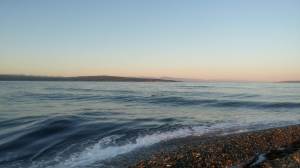
Thanks to Wayne Rourke and Bob Dice for their kind words … and reminding me why I write …

Unknown's avatar

The virus exchange

The view from Marine Avenue across the low-tide beach.

Whenever we walk the sea walk in Westview, we speculate about the rock structures built up along the beach south of town. There seems to be evidence of both the fish traps and clam gardens Betty Wilson of Tla’amin says exist up and down the coast around here.

Rock walls were built to help soften the sand behind them, stimulating the growth of clams.


In Clam Gardens: Aboriginal Mariculture on Canada’s West Coast, Judith Williams describes the walls of rock built to soften the sand behind them, which enhanced clam production. A 1933 Powell River newspaper article refers to the beach at Grief Point with “clam shell deposits about 10 feet deep and several hundred yards long.” The huge volume of shells signaled sophisticated systems of ownership and cooperation that existed long before the arrival of Europeans and a population large enough to need a sizeable food supply.

The view down toward the beacon at Grief Point, barely visible in the distance. Note the wall of clam shells on the right. This photo from the Powell River Museum collection was taken, I think, in the 1930s. (I need to do more research, but the museum is closed right now.)

Fish traps were built to trap fish at low tide for easier harvesting.

In the midst of fears about Covid 19 and the xenophobia that sometimes accompanies it, it’s especially poignant to think back to what life might have been like here and in the rest of the Americas before European viruses arrived In 1491: New Revelations of the Americas before Columbus, author Charles Mann points out that in the so-called ‘Columbus exchange’ Europeans benefited enormously from the knowledge and technologies of the Americas – including the extensive plant breeding that produced potatoes, corn, squash, tomatoes, and cocoa, to name a few. The single prevailing gift from the Europeans was disease.

1491 is a massive piece of research that uses the written records of the first European arrivals as well as the archaeological and ecological record left by human artifacts, pollen deposits, tree rings, and other data now readable with new techniques. Current research indicates the Americas were heavily populated with estimates ranging from fifty to one hundred million people. The diverse communities diverted watercourses for irrigation and flood protection and to enhance fisheries, cultivated and bred corn, potatoes and other plants to produce higher yields and adapt to local growing conditions, and used fire to manage forests. In many places tens of thousands of people gathered together and built elaborate cities.

Initial records of European explorers and settlers, especially those written before Indigenous populations were decimated by illness, include descriptions of landscapes and communities that support Mann’s theories. Post-plague narratives, however, often tell a very different story. Conservative estimates now suggest that more than eighty percent of the population across the Americas perished.

By the time Europeans arrived on the northwest coast, the plagues had preceded them. BC geographer Cole Harris’s Voices of Disaster: Smallpox around the Strait of Georgia in 1782 outlines how smallpox arrived here long before the first wave of settlers in the mid-1800s. What they saw was the aftermath of a holocaust, not the kind of thriving civilizations that had existed before and were able to support larger projects like the building of clam gardens.

In his introduction Mann mentions visiting Gitxsan Neil Sterritt in Hazelton at the Ksan Carving School just as the Gitxsan-Wet’suwet’en title case was beginning. The research for that case revealed a complex cultural, economic and political system, now recorded in the court transcripts. Mann credits that visit as one of the events that stimulated him to try to uncover some of the hidden or forgotten stories of the pre-Columbus civilizations.

When I told Neil about Mann’s book, he recommended I take a look at Dark Emu Black Seeds: agriculture or accident? by Bruce Pascoe. Pascoe describes how the Aboriginal peoples of Australia, like the people of the Americas, were organized into societies much more complex than the settler myth of a few hunter gatherers scattered across the land. Knowing this, he argues, benefits both settlers and Aboriginals alike. “If we look at the evidence presented to us by the explorers and explain to our children that Aboriginal people did build houses, did build dams, did sow, irrigate and till the land, did alter the course of rivers, did sew their clothes, and did construct a system of pan-continental government that generated peace and prosperity, then it is likely we will admire and love our land all the more.”

It’s not so very long ago that Chief Justice Allan McEachern in his (since overturned) decision on the Gitxsan-Wet’suwet’en court case exemplified the way many Canadians thought (and still think) about First Nations. He said that the Gitxsan and Wet’suwet’en did not exist as a people: “The plaintiffs’ ancestors had no written language, no horses or wheeled vehicles, slavery and starvation was not uncommon, wars with neighbouring peoples were common, and there is no doubt, to quote Hobb[e]s, that aboriginal life in the territory was, at best, ‘nasty, brutish and short.’”

He could not have been more wrong. As new evidence comes to light and as old sources are re-examined, Mann, Pascoe, Williams, and others urge us to re-evaluate how we think about Indigenous cultures.

We haven’t done such a great job of managing a wonderful food source, one we just might need in the future.

As we all face this Covid game-changer, as the manufacture of all the cheap junk we are so fond of slows down, air travel shrivels, and we stay closer to home, it gives us an opportunity to find out what we can about Indigenous cultures in our own communities. We can look to earlier Indigenous practices to model more sustainable ways to function in our ecosystems and marvel at how resilient those cultures have proven.

And we can hope we don’t need to re-live the horrors our First Nations experienced. Instead we can hope the generosity and compassion our political leaders are showing (for the moment) are carried forward and we continue to invest in the well-being of our community and our planet.