Unknown's avatar

Oh, if only we could all sing together…

Kathaumixw is a Coast Salish word – a gathering together of different peoples – and is the name given to the international choral festival that has been held every other summer in Powell River on BC’s Sunshine Coast since 1984.

I grew up in Powell River and my mother still lives here, but this is only my second visit to the festival. My own United Church experience of choirs was pretty stodgy, though I do remember when Frank Bemrose sang O Holy Night at Christmas, shivers ran up my spine. It was his wife, my Grade Three teacher, who suggested I just move my lips when we sang at the Christmas concert. In spite of her, I used to lie in bed at night singing my heart out for the talent scout I knew was hiding in the closet so as not to make me anxious.

It wasn’t until I joined the Smithers community choir, Local Vocals, that I realized what powerful emotions are given expression in a choir. Mrs. Bemrose was right; I am not a strong singer. But surrounded by a cluster of talented altos who are very friendly about nudging me up or down the scale when necessary, I think I do okay. Well, mostly. There are days when it’s hard to batten down the jealousy I feel when those special voices ring out true and clear around me.

Kathaumixw is truly the perfect word – this festival is rich in musical differences. Each choir has its own personality: some are controlled, the singers barely moving, the voices the only projection coming from the group. They lean slightly forward, eyes on the conductor, attentive to every nuance of tone, tuning, blending and dynamics.

Other choirs are pure energy. They move and clap and laugh, visibly enjoy the sounds they are creating, the peculiar calls and responses the composer calls for, the clicking and whistling, the honking of small horns, the yodels and thunderstorms. These are not stodgy, these choirs, they are not stuffy. They can belt out an African-American spiritual, hollering and stamping. And somehow forty singers can hush down as quiet as a mother bending over a sleeping child.

But while I love to sing, I’m a writer. And however well a choir’s voices blend, you can find a Russian novel’s worth of characters standing side by side on the risers. As the music flows through them, you can see that big man on the left with the goofy hair is singing from some deep soulful place; the skinny little soprano who’s always smiling probably brings cookies to rehearsals. The middle-aged alto reaches out a hand to the baritone beside her. He steps closer to put an arm around her as the song reaches its crescendo. Afterward, he bends to her, she nods and steps away. Some crisis averted. Plot potential abounds.

The children’s choirs are miracles of diversity: one girl with dead straight black hair that sticks out like she’s taken part in a science centre’s high static demonstration; a little guy, can’t be more than six, has a dozen cowlicks, his exuberance barely contained. Beside him, a girl with tight pigtails stands apart, her mouth barely opening, the notes squeezed out through some powerful resistance. As a young women’s choir – a kind of finishing school for young ladies of the eastern seaboard – walks onto the stage, one girl sails out, large and calm, her hair bright pink, the only colour in the pall of ashen gowns and decorous hair.

As all these shapes, sizes and personalities sing, you can feel they are changed by the music and you know the music is changed by them. Some are struggling with technical difficulties, perhaps. Others might be reliving the heart-breaking memories of a winter’s night. When they belt out Hallelujah, one is maybe thinking how she’d like to kill the conductor for not giving her the solo. One is trying not to throw up from nerves or a hangover, one is pregnant, another has just miscarried, a grandfather has just heard that his daughter is leaving her husband and, for each one, the song tells a unique story.

As a writer, I find myself lost in their faces, their postures, their gestures and stances. With singers from Asia, Europe, Africa and New Zealand and North America, they literally encompass the world. There are a thousand unique characters that will gather tonight for the final massed choir singing of Oscar Peterson’s Hymn to Freedom and running through them all flows the great river of music. How could a writer not be jealous? How could a writer not be inspired?

Unknown's avatar

Happy New Year, Glenwood Hall!

Geological time: New Year’s Eve

Sometimes the clouds hang low
muffling conversation between the rocks and sky.
It’s as if the mountains aren’t there,
as if we’re in some country or other
where the hills keep mumbling past,
the promise of mountains
never delivered.

They’re there though. They’re always
there and they’re not sleeping.
And that’s not grumbling
you hear. Under the wet blanket
they’re giggling. They’re planning
their next party. What colour
to wear. How much glitter to sprinkle
into their uncombed hair.

When the boyfriend came to visit all those years ago
they snickered at my disappointment. Waited
until he was gone to jump out from behind
the clouds and yell, surprise!
I laced up my dancing shoes and got right to it.

Last night those same mountains
dressed up in their tight white shirts
and packed themselves into the hall. Someone’s kids
played horns and belted out old soul standards –
          Try a little tenderness
          In the midnight hour
          Chain of fools –
while we flung ourselves around, moonlight
sprinkled in our hair. For old timers,
we still dance pretty good.


Unknown's avatar

Art and Activism

I had a wonderful few days on Gabriola Island this past week as a guest of Save Our Shores Gabriola (SOS) and Gabriola Friends of the Library. Thanks very much to Kristin Miller for taking such good care of me. (Thanks also to The Writers Union of Canada for funding.)

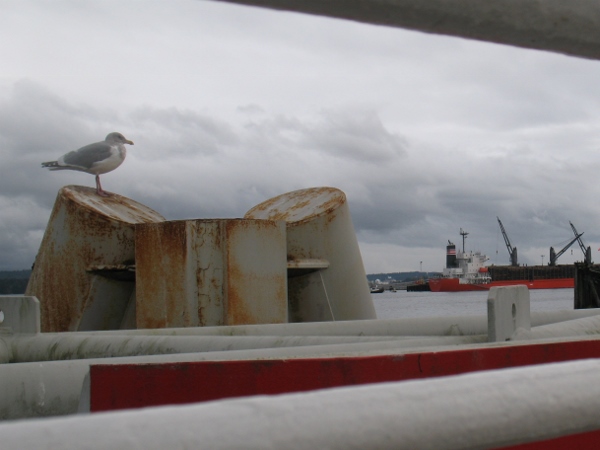
 seagull on dock (600x450)

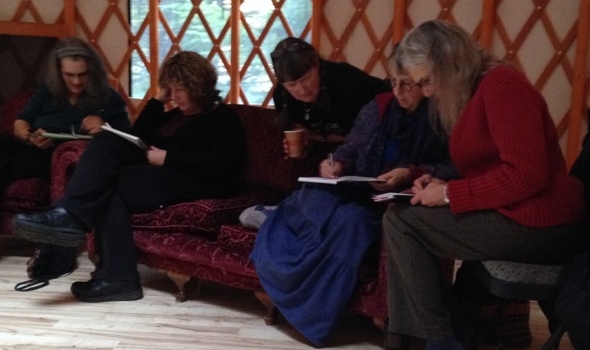
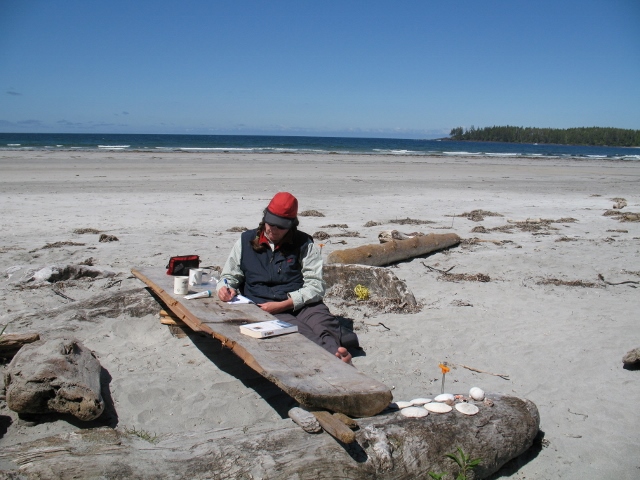
 Six creative souls came to the poetry workshop in the poetry yurt, run by Poetry Gabriola,  set in the trees beside The Commons

The workshop was meant to inspire people to express their anger, frustration, distress   about events taking place in the world. We explored some darker themes and then lightened things up by writing limericks – it’s hard to write a limerick without laughing. There won’t be any Nobel Prizes forthcoming (whoopee, Alice Munro) but it was fun.

 Raymond composes
Photo: Viviann Kuehl
Intense

Photo: Viviann Kuehl


I also gave a reading at the library from my novel, The Taste of Ashes, with a focus on the ways in which activism propels and informs my writing. Over time it has become clear that an interest in, concern about and a sense of wanting to bear witness to people’s courage are fundamental issues in the work I admire most. It’s little wonder that those same values and concerns for social justice show up in my writing. 

 Sheila and Kristen

And what an audience! The collective knowledge and wisdom in the room was awe-inspiring. One woman had been to Afghanistan with Global Exchange – the amazing group that facilitated my trip to Guatemala when I was researching The Taste of Ashes.

The visit ended with an SOS Gabriola dinner meeting – a group of Gabriolans committed to preventing oil pipelines and tankers in BC lands and waters. It was an honor to be a part of their month-long celebration of Art and Activism around the island. All around us hung quilts made for the Clayoquot Sound protests twenty years ago now.


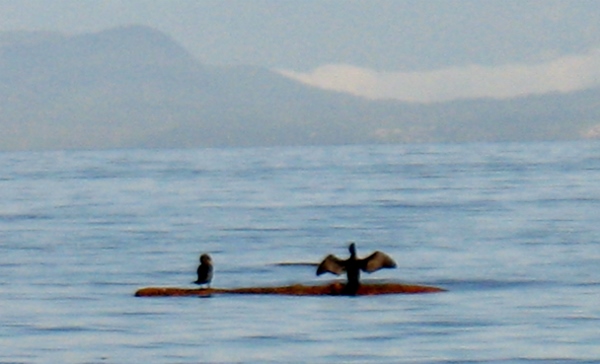
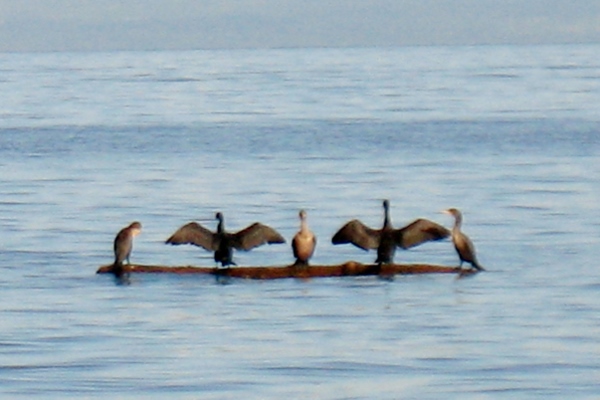
cormorants 1 (600x364)

Bravo to SOS for calling it a celebration – all too often we are taught to think of this work as negative because we’re against what industry likes to call development. Exploitation is a more accurate term.

As well as sharing a delicious meal, we talked about the ways in which people respond to the dangers posed by our ever-increasing use of fossil fuels. How do we motivate people to act? How do we support and value people who don’t feel able to stand up and speak up? How do we support all the differing ways community members contribute on the ground (creating and maintaining a place like the Commons, for example) and in the oh-so-impure corridors of power (MLAs, MPs, larger environmental organizations, for example)?  As Bill McGibben writes in Oil and Honey, the story of the rise of the 350.org movement, environmental activism is long-term – it’s not something that’s going to get done, like that deer fence you need to build around your garden. Jean McLaren was one of the first Raging Grannies, was arrested at Clayoquot Sound and is still taking part in events in her eighties. She and Heidi Brown shared dinner with us last week; twenty years ago they edited the Raging Granny Songbook.
cormorants 2 (600x448)

I was happy to tell the folks from Gabriola that in the north we, too, have people with that long-term commitment. We have young people who are being mentored by those who have been doing this work for over thirty years (with many successes) and those same young people are bringing their amazing talents to the table.


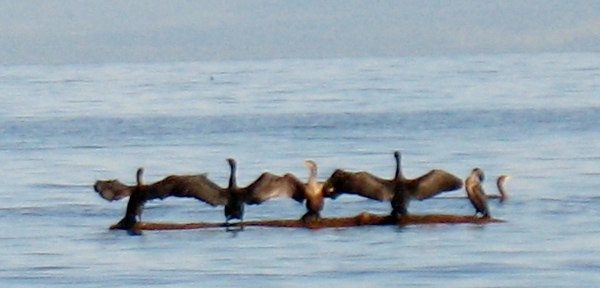
cormorants 4 (600x288)

Eight community groups in eight communities across the north are working with First Nations to stop the Enbridge Gateway pipeline; others are springing up to try to unravel the “plate of spaghetti” of proposed LNG pipeline routes; all are committed to resisting the free-for-all that is both provincial and federal government policy around tar sands, fracking and coal.

 cormorants 3 (600x400)

And artists – musicians, visual artists, poets, and dancers – are standing beside scientists, farmers, fisherpeople, and others who are beginning to understand the price tag attached to fossil fuels, tar sands expansion and climate change. Artists are reading scientific reports, carvers are putting up blockades, biologists are making quilts, and poets are running for city council. And fishermen like Guy Johnston will be joining thousands of people across the country on tomorrow’s National Day of Action against fossil fuels expansion. 

Find an event and get there if you can. sea lions (600x450)


Unknown's avatar

Bravo Guatemala!

Many people have asked me about the chapters of A Taste of Ashes that refer to Guatemala’s political history and its human rights record. Was/is it really that bad? they ask. Having read the testimony of witnesses and survivors, the carefully gathered (often at great risk) forensic evidence, I can unequivocally say yes. Yes, it was bad and still is. But there is some, at least momentarily, good news to report.

The Rights Action Team posted this news a couple of days ago:

At 6:45pm, May 10, 2013, Guatemalan general Efrain Rios Montt was found guilty in a Guatemalan court of genocide and crimes against humanity and sentenced to 80 years in jail.  This is an extraordinary and precedent setting achievement, all the more so in Guatemala where repression, impunity and racism remain society wide and systemic.

All respect to and admiration for so many people and so many organizations – most particularly Guatemalan survivors of genocide and other crimes against humanity – who braved on-going repression and impunity to keep fighting for over 31 years for this measure of justice.  Deep thanks to so many individual and foundation donors who have, via Rights Action and other groups, supported so many years of courageous, never-ending work for truth, memory and [finally, a bit of] justice.  Gracias.

Cheers, we heard, broke out in the courtroom and I have to report that cheers broke out in my house too. If you know anything about the labyrinthine process that is the justice system in Guatemala (read The Art of Political Murder: Who Killed Bishop Gerardi? by Francisco Goldman), you’ll know that this is not likely the end of anything – but it is welcome news to the indigenous people of Guatemala who received the brunt of la violencia during the long civil war in which hundreds of thousands of people died. Montt was the country’s leader for part of that time.

Curiously enough, I had just picked up an old copy of Jacobo Timerman’s Prisoner Without a Name, Cell Without a Number and was reading his moving account of his time in detention in Argentina during its military dictatorship in the 1970s. In the beginning of the book, he outlines his ideas of what brought about the end of democracy in his country and the introduction of such violent and brutal repression. In it he quotes a moderate politician – we know who are the killed, but we don’t know who are the killers. And no one seemed willing or able to change that: to find them, name them, and bring them to justice.

This is able to happen, Timerman implies, when the public and politicians raise their hands and say they can’t do anything about it. There’s no point, people say. They’re all the same, people say. Which gets them off the hook. It’s hard to blame people for chickening out when political engagement can mean imprisonment, torture or death. But his words feel especially important this evening as I’m waiting for the results of the provincial election here in British Columbia, where the voter turnout in the last election dropped to 50%, the second lowest in the country.

Maintaining a peaceful society requires hard slogging day after day. It needs us to inform ourselves and raise our voices; it needs politicians who are willing to listen and act. There are no simple answers to complex problems; we must all put in the work to give our politicians understanding and support to find and implement workable solutions. Or we turf them.

Meanwhile – how lovely to think of Efrain Rios Montt named for what he is. Bravo!

Unknown's avatar

International Women’s Day – Imagine!

When I was asked to speak to the Hazelton International Women’s Day celebration several years ago, I was first flattered, then I felt really old, and then I freaked. The request was like sprinkling warm water and sugar on what passes for my mind. A mind that some days feels like a batch of bread dough without the yeast. When I realized I’d said yes and would be standing up in front of a group of brilliant women, well, things started fizzing and bubbling. Mostly with anxiety. When I got down to the work of kneading that dough into some kind of shape, I had a hard time fixing on anything. What did I have to say about imagination? You’re a writer, I was told, you should be able to think of something.

bread (432x640)

So I started thinking. And for some reason I kept thinking about bread. One of my happiest childhood memories is of coming home from school to the smell and taste of my grandmother’s buns, her cinnamon rolls, her bread. There are many kinds of bread and I’ve been filching and trying bread recipes for years. But although you hope your bread is going to taste good and be nutritious, it’s the work of making it that counts.  It’s called being alive.

Lots of hard work goes into making bread and into living both, but there’s an ingredient we often forget about.

Time.

And I don’t mean the kind you never have enough of. The time to do all the things you think you need to do and can never get done. I mean the other kind of time, the kind most of us are banishing from our lives.

Here’s my granny’s recipe for buns:

Scald two cups of milk. Add shortening, sugar and salt.
Let sit until lukewarm.
Sprinkle yeast on top.
Let soften.
Beat in one egg, then add enough flour to make a sticky dough.
Cover and let rest.
Turn onto a floured board and knead until dough stops sticking and is smooth.
Place in a greased bowl, cover, and let rise in a warm place.
Punch down, form into buns.
Cover and let rise again. Heat oven. Bake for 15 – 20 minutes.

It’s the other kind of time we forget about. The time to let the yeast come to life, join with the air and lift that dough up off its butt. Time to regroup and rise again. Time to kindle a fire, and time to leave the bread to bake. You’ve got to work the dough and you’ve got to let it alone.

I made some of my granny’s buns this morning. And as I punched them down, I thought about standing up and talking to an incredible group of women, women who have already forgotten more than I’ll ever know about living, women who have suffered, women who are way better at having fun. I felt like a fraud. What could I possibly have to tell you?

I may as well have been punching myself as punching down that dough.

Thankfully yeast doesn’t need confidence to rise. It can sit for a long time in the back of your cupboard looking pretty near dead and, given the right circumstances, still rise.

Like you, I was born with my ovaries chock full of eggs. A lot of them flowed away, quite a few were duds, and a couple made their complicated way out of my body and joined us here. Two boys, bless their hearts, who taught me a lot about love, terror and self-doubt. All of us, men and women, are born chock full of those little yeast-like pellets of imagination. They’re inside there, waiting for almost any excuse to rise up.

Mary Oliver, a wonderful and wise poet, calls imagination “a sharp instrument”. It cuts through our isolation and gives us the capacity to feel a stranger’s pain, to understand a friend’s anger, to share a child’s joy, to share the unique experience of being human. But it cuts both ways. We can imagine failure, embarrassment, ugliness, or, heaven forbid, ordinariness, much easier than peace, beauty, brilliance. It may take days and months to grow a story or a song, years to grow a child, a century to grow a tree. But if we don’t guard them carefully, it takes only seconds to cut them down before they reach the ripeness they’re due.

I grew up in a time when we didn’t really recognize the dark side of imagination. Women’s liberation and the pill were new enough to be untarnished. I had no idea how hard women had fought to get there and how terrified, angry and hostile some people were about their victories. Imagination was, to me, something fuzzy and warm. We believed, like John Lennon, that by imagining a better world, we could build it. We would make love, not war. The bad guys would lay down their guns and come with us back to the land.

That the bad guys had ideas of their own, that they were, in fact, part of who we were, never registered.

It took moving into a small community to realize how far many of my ideas were removed from people’s day to day lives. It wasn’t that people here were less advanced. It was that the community was close enough, small enough, for me to be able to see how people could be many things at the same time.

I still had lots of ideas though, and lots of those were about kids. Although I hardly knew any real children, I liked the idea of them. I imagined raising these ideas of children in a warm and fuzzy place where we’d live in peace and harmony and eat whole wheat bread. Where we’d play wholesome creative games, share the work and the fun, and it wouldn’t make any difference if they were boys or girls.

I think these were good ideas and I’m glad I had them. But I wasn’t prepared for the real thing. The gut-wrenching love I felt terrified me. So did the power of my frustration, resentment and fury. No one had told me about that part. When you make something, it takes on a life of its own and sometimes goes places you’d rather it didn’t. The flip side of creation.

And then the self-doubt. I doubted myself as a mother. I probably had my first clue that I wasn’t going to have complete control over what my children thought and did, that maybe heredity, gender and culture had their hands in the bread dough, when Daniel started biting his cheese into the shape of guns and shooting things. When he spent hours looking at a book of drawings of earth movers. When his first phrase was “wheels on it”.

Then one day, when some earnest mothers were sitting around my kitchen table, reality came crashing in. We were mounting a campaign urging parents not to buy their children war toys for Christmas. Another great idea. The kids came trooping down the stairs lugging the machine guns they’d built out of Lego. We looked at each other, aghast. Then, mercifully, we had the sense to laugh, and laugh we did. But I have to tell you, there was a layer of hysteria underlying the laughter.

We’d been imagining a better world, alright, and even getting some good work in on that bread dough. Hard kneading. How had we produced these little wanna be killers? Why did our boys spend hours blowing up Lego with firecrackers? Why did our girls simper and want Barbies? Why did we feel such anger and guilt? I even remember feeling as if I was a failure because childbirth hurt. Was it a failure of imagination?

No. It was misunderstanding imagination. Not accepting that in the work of hatching children, of hatching ideas, there’s a process that requires time out. That requires punching down. That also needs high temperatures. That it doesn’t always go the way you want it and sometimes that’s not so bad.

I learned finally, with the help of my community, and with the help of some great books on writing (all written by women by the way) to accept those parts of the process that feel like time’s a wasting. When everything seems like garbage, when I feel really uncomfortable, I know creativity is happening. I still piss and moan about it, but I know the only way to get over it is to go through it, right through the middle of it.

Mary Oliver calls a poem “a confession of faith.” Keeping at it even when self-doubt is sitting on my shoulder, when my family, my job, and my community want me to do other things, other important things, is my confession of faith.

I’ve got a ragged old poster of Virginia Woolf on the wall above my desk. I’ve hauled it around with me and moved it from wall to wall for at least 25 years. She wrote that all a woman needs to create is a little money and a room of her own. We all need to build that room in our hearts and make sure it’s our room, not one our culture, our friends and family tell us to build. Not the one we tell ourselves we ought to build.

If the noise of the world keeps you from hearing what those little yeast pellets of your imagination need, then it’s time to turn off some of that noise. Literally. Turn off your television, your radio, your computer, open a window or, better yet, go outside, mosey down to the river and breathe. This is important work. It cannot be left until the last.

If, instead of breathing wonderful glorious air, we inhale a culture that tells us what to think and feel with every turn of the knob, what music to listen to, what clothes to wear, what mutual funds to buy, that tells us our truck is too old, our kids need $200 running shoes, that a holiday at a nearby lake is boring and we really ought to go to Mexico, we can’t hear the voice whispering inside of us.

Some of you may be thinking you’re not the creative type; you don’t sing, dance, or paint. Don’t worry. Being creative is hatching an idea and giving it the time and space to grow into something. Every time you think of a way to make your community better, every time you piece together a party, you come up with a better way to run your business, you’re being creative, you’re using your imagination.

But if you’re doing all those things and more besides, and still feel something’s missing, you need to make time and psychic silence to listen to your heart. Put out your elbows, like they tell you to do when the avalanche is coming, and make room for your imagination to breathe even if it feels like it’s buried under tons of snow.

If every second of our lives is occupied with structured pleasure or work, with television and microwaved popcorn, with piano lessons and cross country ski racing, we lose the ability to imagine a world where we are not measured at every turning against an impossible yardstick. We forget that bread doesn’t come from bread machines. We forget the pleasure of plunging our fingers into sticky dough and kneading.

But be careful. Because once you let your imagination loose, once it starts working, you had better tend to it or it will make a godawful mess of whatever spot you leave it in. That yeast may even start to grow in places where it has no business, where it makes you itch and squirm so badly even the best loving won’t take care of it.

Self doubt is part of the process. I realized how messed up we’ve become when we feel guilty about guilt, we feel like losers because we dare to doubt. Guilt and doubt are part of living. It’s time to stop blaming ourselves for those doubts, but there’s no point in blaming anyone else either. A friend said to me she was tired of hearing people tell her how they don’t have time to do what they really want to do. You can’t wait for conditions to be perfect, for there to be enough money, the perfect light, a satisfied family. We can and do create from many different places in the same way we make babies: from places of love, of joy, of hope, of perfect readiness, but also in anger, in resentment and even sometimes in hate. Creating may drive us crazy, but create we must to be healthy and whole.

I’m the only one who can sit down at my desk and write; and it’s no one else’s fault if I don’t.  Sure, it helps if I have the support of my family and friends, but they can’t do it for me. And if I really want to do it, they can’t keep me from it.

“A poem is a confession of faith.”  So is a baby, so is a home. So is a loaf of bread. A confession of faith that we are here for more than house work and more than a pay cheque.  “Imagination is a sharp instrument.” We have to keep it sharp to outwit the horrors that surface in the minds of bigotry, of greed and of fear. Imagining and creating is not something to be left until everything else is done; it’s the most important work there is. And like breathing, it isn’t over until you’re dead. If you win a little level ground, you’re lucky. If you get to the top of something, the only direction is down and sometimes it’s the direction you have to take.

You’ll have to fight for that breathing space, and you’ll have to keep fighting and you know, sometimes the person you have to fight the most is yourself. Every day that I manage to find my way to that room, set aside time and space to feed the sourdough of my imagination, to let it breathe and grow, every day that I sit down to the hard work of punching and kneading that dough into shape, I am offering my confession of faith. Sometimes I write in anger, sometimes in love. Sometimes my poems are terrible, but you know, sometimes, they’re true and beautiful.

In his inaugural speech Nelson Mandela said, “Our deepest fear is not that we are inadequate. Our deepest fear is that we are powerful beyond measure. It is our light, not our darkness that most frightens us.” That light, he said, is in everyone, and, as we let our light shine, we unconsciously give other people permission to do the same. As we are liberated from our own fear, our presence automatically liberates others.

Every day the world gives us air to breathe is, I figure, affirmation enough. We’re still here; we must have something worth doing. It’s time, right now, to get on with it.

Sheila writing (640x480)

Unknown's avatar

How everything finds its way in

Ancient Light by John Banville

lucy-sunset

While there may be nothing new under the sun, it’s always fun to find your own ideas reflected in others writing – especially when the writing is pretty fancy pants, as has been said about John Banville’s work. He is an amazing writer who dives deeply into whatever story he is telling and is a fantastic wordsmith. The opening pages of his latest novel, Ancient Light, would make many of us either exult at the magic evoked by mere words upon a page or whimper in envy.

April of course. Remember what April was like when we were young, that sense of liquid rushing and the wind taking blue scoops out of the air and the birds beside themselves in the trees?

It is April when narrator, still a boy, catches a glimpse of a woman’s underpants as she bicycles by, the wind catching and lifting her skirt.

Nowadays we are assured that there is hardly a jot of difference between the ways in which the sexes experience the world, but no woman, I am prepared to wager, has ever known the suffusion of dark delight that floods the veins of a male of any age, from toddler to nonagenarian, at the spectacle of the female privy parts, as they used quaintly to be called, exposed accidentally, which is to say fortuitously, to sudden public view. Contrary, and disappointingly I imagine, to female assumptions, it is not the glimpsing of the flesh itself that roots us men to the spot, our mouths gone dry and our eyes out on stalks, but of precisely those silken scantlings that are the last barriers between a woman’s nakedness and our goggling fixity. It makes no sense, I know, but if on a crowded beach on a summer day the swimsuits of the female bathers were to be by some dark sorcery transformed into underwear, all the males present, the naked little boys with their pot bellies and pizzles on show, the lolling, muscle-bound lifeguards, even the hen-pecked husbands with trouser-cuffs rolled and knotted hankies on their heads, all, I say would be on the instant transformed and joined into a herd of bloodshot, baying satyrs bent on rapine.

You can hear Joyce and old man Yeats before him, in this rich and rolling voice. (Did I say, Banville is Irish?)

In this novel, which is richest in its remembrance of summer the narrator, Alexander Cleave, had an affair with his best friend’s mother (I’m not giving anything away: the novel begins, Billy Grey was my best friend and I fell in love with his mother. Love may be too strong a word but I do not know a weaker one that will apply. All this happened half a century ago. I was fifteen and Mrs. Grey was thirty-five.), you become so drawn into what one reviewer called the narrator’s (and, one can only assume, Banville’s) “forensic memory” that you almost forget what is inherently wrong with the affair and it is only obliquely you realize what damage it has done to the man. But the story is really about memory and how elusive it is.

The novel’s title refers, first of all, to the doctrine of ancient light, the protection offered those living in small dwellings when the construction of tall buildings threatens to cut them off from the sky. I often invoke it when I climb out of the canyon where I live and walk across my neighbour’s property to find a few more minutes of sunlight. Mercifully our current neighbours welcome us into their high pasture, but that has not always been the case. This kind of trespass is always easier in the summer, but it’s winter when you need it, and it’s winter when, because of the snow, you can’t hide your tracks.

Much later in the novel, Banville writes, Now he was speaking of the ancient light of galaxies that travels for a million – a billion – a trillion! – miles to reach us…and so it is that everywhere we look, everywhere, we are looking into the past.

It reminded me of a poem I wrote many years ago now, thinking of the ways we measure the world, and, as you can see, thinking about winter and the long wait we have here in the north for spring. A spring you can almost forget exists after months of snow.

Some laws of physics

 1

When you touch my skin
it is warm
hot even under the rough sweater
the greedy heart oblivious
to all but its own pumping

The lean thermometer of bone
does not measure the wind
whining across the gaps
the synapses shivering
the ice forming

2

How like water you are
Even as I freeze
shrink into my foetal fist
you expand
offer yourself as a bridge

3

What span of light or years
can describe the distance travelled
between the moment when you hesitated
and the next

What lightening in the slow drift of your turning
away

Light moves so strangely
While I watched the heft of your shoulders
under that tan shirt
worn soft as the wrinkles
on an old woman’s hand
I was already watching
the past

4

All the ways we devise to measure
time and temperature
the pressure of a planet’s worth of breath
upon our skin

Alone
I call out
if only to hear an echo
down here in the canyon

I pace the confines of my damp cells
on a morning when the larch is waiting
to explode into green

It’s not only the time it takes light to reach us that throws doubt upon what we see, it is the way in which light and vision work together. The colours you “see” are only those which the observed object does not absorb – in a way, you’re seeing everything but what is there.

Saskatoon light

There’s a place on the road to town where the trees close in.
Whatever heat and dust there might have been
hardens into damp clay smoother than any asphalt,
and older. There are trails like this
that cut across the backs of mountains; one dark side
leans right up against your shoulder
nudging you over to the other side, an edge
that drops into a tangle of dark logs smudging
into moss. You button up your shirt
and wish you’d brought your jacket.

There are many kinds of shadows. Some so hard bent
that not even a horsetail can snout through
the layered leaf mould. A poultice
that gathers whatever scraps of light
it finds and funnels them deep.
The kind of light our bodies hold
after every other warmth is gone.
Scant heat. Old bones.

And suddenly there’s a Saskatoon bush
unbending from its usual roadside squat
straightening into this unexpected opening
to become, because it’s June, its own small light.
Three or four thin branches reach out white, the flowers reflecting
every particle of light, every red, orange, yellow and blue back out
to where you pause. Enough to light the shadows
with a dozen shades of green. Its refusal,
generosity.

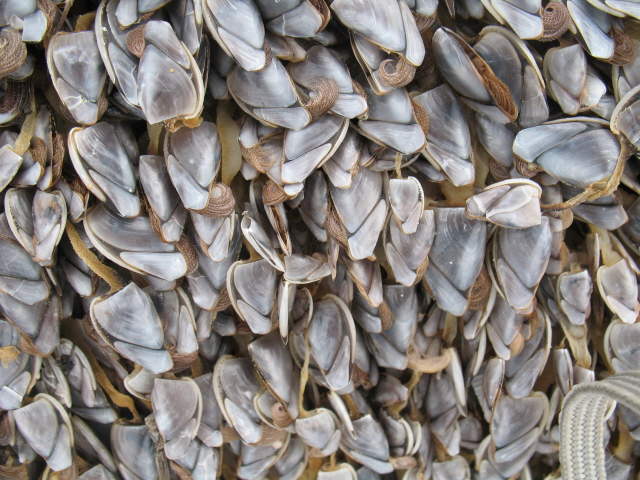
pelagic goose barnacles

In Ancient Light, Banville asks, “What is the length of a coastline?” and proceeds to discourse upon the way in which we measure distance and time. He is referring to Benoît Mandelbrot’s paper which asked, how long is the coastline of England? It all depends, Mandelbrot (and Banville) argue, on how you measure it. The shorter your measuring stick, the longer the coast becomes. If you measure each tiny outcrop and then in between each stone, each pebble, each grain of sand and deeper in between smaller and smaller increments, each molecule, each atom, well, you can see it’s longer than you thought. This fractal geometry becomes an illustration of how infinity can be contained within a finite space.

The idea of infinity contained within a finite space is fascinating on its own; it is, of course, what writers are always trying to do: namely, contain the richness and complexity of the world within the exceedingly finite space of a poem or a story. I also used this image in my presentation to the Enbridge joint review panel hearings on the proposed northern gateway pipeline route.

We never know what will find its way into our writing – there is nothing that is not, at some time, useful. Thanks to John Banville for reminding us of this. And for writing another riveting novel.

Some laws of physics is from the weather from the west.

Unknown's avatar

Skookum Wawa

On Feb. 2, communities of BC’s northwest will be gathering in Terrace to celebrate the withdrawal of Shell’s plans to drill for coal bed methane in the Sacred Headwaters. Congratulations to all of those who worked so hard to pull this off. And while she’d hate to be singled out, Ali Howard’s swim down the entire length of the Skeena  River drew international attention to the threats Shell’s plans presented.

I wrote this poem to celebrate her achievement. For those of you who might need a bit of background for the Chinook terms in the poem, let me explain. I grew up on the south coast of BC where Chinook terms are commonplace: the ocean is the salt chuck; the wild rapids near Egmont on the Sechelt Peninsula  are called Skookum Chuck, which means powerful water. In 1975, Gary Geddes edited a collection of writing about the northwest, which he fittingly titled Skookum Wawa – powerful talk.

Skookum Wawa

Mountains.
Green meadows.
Spring grizzly grazing
in water welling through rooted sedges.
Waiting water
meanders until flatness finally falls,
falls in three directions.
Water becoming:
becoming Spatsizi, becoming Stikine, becoming Tahltan
becoming Nass, becoming Nisga’a
becoming Skeena, becoming Gitxsan, becoming Tsimshian,
the ancient submerged heart pumping
            oxygen
            salmon
            life into this land.
Bright children leap laughing
to fall, to follow,
to trace in faith one great artery on its way
into the wide arms
of the salt chuck.
Chinook talk
their talk
skookum wawa.
Unknown's avatar

Punto en Aria


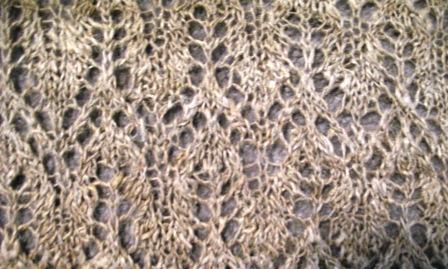
Outside mlace hoody pattern side 1y window, the snow hangs in great swags from the eaves. The bottom edge of the bunting dips into ruffles and finally, where gravity has exerted the most pressure, into a lacy frill. Sunlight shines through the intricate tracery – punto en aria.

Lace comes in many forms and dates back, they say, to the 1400s. There’s needle lace and bobbin lace, where threads are twisted into complicated patterns, there’s cut work or drawn thread work where threads are removed to reveal the design. But true lace – punto en aria (stitch in the air) stands alone, literally. It is its own unique manifestation of absence and presence.   It is the yin and yang. It is light and shadow.

I believe the fundamental nature of lace goes much further back than Renaissance Venice, back to nets, which have been made for tens of thousands of years and are essential markers of our divided nature. We want some things to be contained, others to be set free; we want some things to be seen, other things to be hidden; we need silence between the notes.

In the early eighties, when I started knitting and writing in earnest, lace was for babies, old ladies and soft core porn.  It was for old fashioned tablecloths and doilies stored in your grandmother’s cedar chest. It was for a certain kind of lingerie. It was not for feminists. It was silly, frilly, and frivolous.

Things have changed. Lace is now everywhere. As I write this in my chilly office, I am wearing fingerless mittens with lace cuffs and delicate picot edging. People are knitting lace scarves, lacy sweaters and vests, toques, and stockings. (Now that I think of it, perhaps lace has made a comeback because soft core porn has become mainstream. Cables are big too – probably for those interested in a little S&M).

Knitting lace is what I know, and it is very much like writing. Establishing a pattern out of single stitches strung on a needle or out of the single words strung together on a page can be daunting. It’s one after the other, again and again. Like writing phrases, lines, or sentences, knitting lace is a matter of ordering the components. Joining them, separating them, dropping them, picking them up again. Deciding what to put in, what to leave out. Often, while the work is in process, the fabric looks like a ratty old dishrag, rumpled, crumpled, rucked up and wrinkled. You just have to trust in the process and keep going.

Sometimes, if you’re lucky, you get into a rhythm where the pattern begins to feel organic, something emerging from your heart. Your fingers fly and your mind is elsewhere. Other times you have to stop and count every stitch. Then there are the mistakes you notice much too late, mistakes that especially hard to fix in a lace pattern. As in writing – when you’re building something so interconnected, built word upon careful word to create a seamless whole – well, it’s both difficult and unnerving to have to go back and fix it. Sometimes you have to unravel the whole thing.

Lace is an especially apt metaphor for writing. When you’ve done the clunky work of putting a story or a poem together, you must step back and take a good look to be sure you’ve created openings in the fabric, openings through which your readers can enter, cracks where the light shines in.

Unknown's avatar

The Next Big Thing

Last week writer, Daniela Eliza, tagged me to be part of the interview series, The Next Big Thing, where writers speak of their latest book, work in progress, or manuscript. You can read her entry at http://strangeplaces.livingcode.org/. Here are my answers to the questions.

1. What is the working title of your next book?

Dreaming Downriver

2. Where did the idea come from for the book?

My mother used to tell a story about her exciting but somewhat disreputable uncle who, at one time, was given a place to live by an elderly gentleman in exchange for recounting his dreams every morning.

3. What genre does your book fall under?

Novel

4. What actors would you choose to play the part of your characters in a movie rendition?

Like I can ever remember the names of actors! This is set in the fifties and I’m thinking of some larger than life people I knew as a child in the way that children know adults. You latch on to a few characteristics, but remain oblivious to most of what goes on in their lives. These are all people who are dead now, so I’m inventing a whole new life for them. It’s fun.

5. What is the one-sentence synopsis of your book?

Have you ever read one of José Saramago’s sentences? The ones that are breathless with commas, and go on for pages? Just kidding. It tells the story of how a father’s river journey with his deeply-disturbed son results in the loss of that son, but links the father with people and places in ways he could never have imagined.

6. Will your book be self-published or represented by an agency?

The book will be represented by the Mint Literary Agency.

7. How long did it take you to write the first draft of the manuscript?

I’m not there yet – I have about thirty percent of the first draft. And it’s been a couple of years already. But I know where it’s going.

8. What other books would you compare this story to within your genre?
Sandra Birdsell’s novels, perhaps. There’s Mennonites and rivers flooding. Land disputes and the bizarre workings of the Indian Act. I aim for her combination of visceral language that connects her characters to their surroundings and an understanding of how the larger events of place and time have an impact upon individual lives. But it’s more West Coast than prairie. Much of the book is set in Vancouver and on a small fictional island off the coast near Cortes Island.

9. Who or what inspired you to write this book?
I was very influenced by Hugh Brody’s classic, Maps and Dreams which speaks of his time with the Danezaa people in BC’s northeast and, of course, links in with the crazy dream idea that set this all in motion. Then there’s Jung. Plus  I’ve read many stories about the Parsnip and Finlay rivers before the Peace was dammed – and so I wanted to recreate this place and time as part of the novel and link it with the alternate universe known as the West Coast. The displacement of people, mostly First Nations, and the creative strategies people find to mitigate personal, cultural and environmental damage all reflect many of the events we’re facing today.

10. What else about the book might pique the reader’s interest?
Anyone who has read my first novel, The Taste of Ashes, knows I like to build a plot that pulls my readers along. This will be similar.